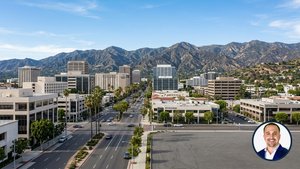




Selling a Home in San Gabriel, CA in 2026
The SGV's hidden-value sweet spot: $1.1M median, Mission District character, and a buyer pool priced out of Arcadia and San Marino. Here's what you actually net.
As someone who has sold homes in the San Gabriel Valley for over 13 years, I watch San Gabriel get overlooked in favor of its flashier neighbors constantly. Arcadia gets the luxury headlines. Alhambra gets the value-play narrative. San Gabriel sits between them and quietly holds $1.1M medians while offering something neither city fully delivers: historic character paired with genuine community infrastructure. The Mission San Gabriel Arcangel - founded in 1771 and considered the "Godmother of the Pueblo of Los Angeles" - is not just a tourist landmark. It anchors a Mission District neighborhood that commands real price premiums and attracts a very specific, motivated buyer.
What I tell my San Gabriel clients before they list is this: the buyer coming to your door is often not someone who randomly found San Gabriel. They are someone who got priced out of Arcadia at $1.8M or San Marino at $3M+ and consciously chose to look at San Gabriel as the next best alternative. That buyer is motivated, often has significant cash, and knows the SGV well. Price your home correctly, prepare it for their expectations, and the transaction moves fast.
This guide covers what that buyer pool actually looks like, how the three pricing zones inside San Gabriel differ, what sellers are realistically netting at three price points, and what upgrades actually pay back in this market. No generic seller tips here - everything is specific to San Gabriel in 2026.
San Gabriel Market Snapshot 2026
The headline number from Redfin for early 2026: San Gabriel's median sale price is $1.1M, up 8.5% year over year. Median price per square foot sits at $706, up 11.3% from the prior year. Those are strong appreciation numbers, and they reflect something real happening in this market - a sustained buyer migration from more expensive SGV cities that is propping up San Gabriel pricing even as broader LA County inventory rises.
The nuance is in the days-on-market trend. Homes are averaging 35 days in 2026, up from 28 days the prior year. The total number of closed transactions dropped from 15 in February 2025 to 6 in February 2026 (Redfin). This is a tighter, slower market than the frenzy of 2021-2023 - which actually benefits sellers who prepare correctly. Less competition among sellers means your well-priced, well-presented home is not competing against 20 other listings.
Price Comparison: San Gabriel vs. SGV Neighbors
Sources: Redfin, Movoto, Zillow - Q1 2026 closed sales data
San Gabriel buyers are getting Mission District character, a 250-year history embedded into the city's fabric, and proximity to one of the largest Chinese-American commercial hubs in the country - at roughly 60% of Arcadia's price. That is not a discount story. It is a different story altogether.
🏠 FREE Weekly Workshop — First-Time Buyer Blueprint
Learn exactly how to buy a home in LA — prices, process, and pitfalls. Live every week, totally free.
Reserve Your Free Seat →Micro-Market Breakdown by Zone
San Gabriel is not a uniform market. What I've seen in my 13 years working this area is that the same house - same square footage, same bed/bath count - can fetch $150,000 to $250,000 more depending on which block it sits on. Mission District historic homes carry a genuine character premium. North San Gabriel lots are larger and quieter. The Valley Blvd corridor is more entry-level and draws a different buyer entirely.
Understanding your zone is the single most important factor in pricing accurately and attracting the right buyer. Here is how the three primary zones break down as of 2026:
One note on the San Gabriel Square corridor along Valley Blvd and Las Tunas Dr: proximity to San Gabriel Square - considered one of the largest Chinese shopping centers outside Asia - is a genuine pricing factor for the SGV diaspora buyer pool. If your home is within a half-mile of this corridor, that is a feature, not just a location footnote. Name it in your listing description.
What San Gabriel Sellers Are Actually Netting
The number I care most about for my clients is not the sale price - it's what they walk away with after all costs. What I tell my San Gabriel clients before they list: the gross sale price and your net proceeds can differ by $60,000 to $100,000 depending on your mortgage payoff, agent commissions, transfer taxes, escrow and title fees, and any pre-sale repairs or staging you invest in upfront.
Here are three realistic net-proceeds scenarios based on current San Gabriel pricing. These assume a $600,000 mortgage payoff (adjust for your actual balance), a 4.5% total agent commission under post-NAR commission structure (down from the old 5-6%), and typical San Gabriel transaction costs:
| Cost Item | $875,000 Sale | $950,000 Sale | $1,050,000 Sale |
|---|---|---|---|
| Gross Sale Price | $875,000 | $950,000 | $1,050,000 |
| Mortgage Payoff (est.) | - $600,000 | - $600,000 | - $600,000 |
| Agent Commissions (4.5%) | - $39,375 | - $42,750 | - $47,250 |
| Escrow & Title Fees (1.5%) | - $13,125 | - $14,250 | - $15,750 |
| LA County Transfer Tax ($1.10/$1K) | - $963 | - $1,045 | - $1,155 |
| Pre-Sale Prep & Staging (est.) | - $8,000 | - $8,000 | - $10,000 |
| Estimated Net Proceeds | ~$213,537 | ~$283,955 | ~$375,845 |
Since August 2024, buyer-agent compensation is negotiated separately and is no longer automatically bundled into the seller's listing agreement. On a $950,000 sale, this can save sellers $19,000-$28,500 (2-3%) compared to the old standard. I help clients structure offers that attract qualified buyers without overpaying on buyer-agent compensation. The old "6% is just how it works" era is over.
A note on inherited properties and capital gains: if you inherited this San Gabriel home, the stepped-up basis rules mean your taxable gain is calculated from the date-of-death value, not what the original owner paid. This can meaningfully reduce your tax exposure. I always recommend a CPA conversation before listing an inherited property. For a deeper look, our guide on capital gains tax on inherited property in California covers the stepped-up basis mechanics in detail.
If this is a probate situation, the process is different - court confirmation may be required, and timelines vary. See our San Gabriel probate property sale guide for specifics on the court process for Los Angeles County properties.
When to List for Maximum Offers in San Gabriel
In my experience, timing in San Gabriel is not just about generic spring seasonality. The SGV buyer pool has its own calendar, and it does not match the national real estate narrative perfectly. There are three overlapping buyer demand cycles that matter specifically for San Gabriel sellers:
The most important is the post-Lunar New Year activation cycle. The SGV Chinese-American buyer pool - which is one of the dominant forces in this market - tends to pause significant home purchase decisions during the Lunar New Year period itself (usually late January or early February). The weeks immediately after are when that pent-up demand activates. Listing in late February or early March means you catch this buyer pool at peak motivation.
San Gabriel Unified School District's open enrollment window typically closes in early spring for the following academic year. Families who want their children in SGUSD schools for September need to close escrow by June at the latest. This creates genuine urgency among family buyers in the March-May window. San Gabriel High School holds an 8/10 GreatSchools rating. Gabrielino High School (alternative option in the area) holds a 10/10. These are real selling points for family buyers.
Avoid listing in mid-January to early February during Lunar New Year if you can. Not because demand disappears entirely - it doesn't - but because the SGV diaspora buyer pool, which represents a significant share of your likely buyer pool, is often traveling or focused on family gatherings during this period. The transaction is harder to close cleanly. I've seen deals fall apart in January over scheduling conflicts that had nothing to do with the property itself.
Summer (June-August) is a secondary demand window driven by relocating families. If you're targeting buyers from outside the SGV who are relocating to the area for work or family reasons, summer is not a bad time. But the Mission District buyer and the SGV diaspora buyer are both more active in spring.
What Upgrades Actually Add Value in San Gabriel
What I've seen over 13 years of San Gabriel transactions: most sellers either under-invest in preparation (and leave money on the table) or over-invest in full renovations (and don't recover the cost in the sale price). The SGV diaspora buyer coming from Arcadia has already seen pristine, fully renovated homes. What they notice first in San Gabriel is whether a home is clean, well-maintained, and move-in ready - not whether it has a custom kitchen remodel.
The table below reflects what I've personally seen pay back in San Gabriel sales. These are honest assessments, not upgrade-everything encouragement:
| Upgrade | Est. Cost | Typical ROI | Adds Value? |
|---|---|---|---|
| Fresh exterior paint (full house) | $4,000-$8,000 | 150-200% | Yes |
| Kitchen cabinet refinishing (not replace) | $2,500-$5,000 | 120-160% | Yes |
| Bathroom refresh (fixtures, mirrors, caulk) | $1,500-$4,000 | 130-180% | Yes |
| Front yard landscaping cleanup | $1,500-$3,500 | 150-200% | Yes |
| Deep cleaning and staging | $2,000-$5,000 | 200%+ | Yes |
| Full kitchen gut remodel | $40,000-$80,000 | 55-75% | Rarely |
| New roof (if needed) | $12,000-$22,000 | 80-100% | Sometimes |
| New HVAC (if needed) | $8,000-$15,000 | 70-90% | Sometimes |
| Pool renovation | $20,000-$50,000 | 40-60% | Rarely |
| New flooring (LVP throughout) | $8,000-$18,000 | 85-110% | Situational |
Older Mission District Craftsmans (1910-1940s) frequently show three specific inspection flags that can crater deals if undisclosed: (1) foundation settling or cracking on vintage brick/concrete perimeters, (2) galvanized plumbing in the 1940s-1960s housing stock - it corrodes from the inside and affects water pressure, and (3) unpermitted ADUs or garage conversions, which are very common in San Gabriel but create lender issues for FHA/VA buyers. Heritage trees near the Mission grounds area are also subject to city ordinance and may restrict what buyers can do with the lot.
I recommend a pre-listing inspection for every San Gabriel seller, not optional. Know before your buyer does.
The San Gabriel Buyer Pool: Who Is Actually Buying
San Gabriel buyers who missed out on Arcadia at $1.8M are looking at San Gabriel at $1.1M - and they're serious. Price it right and you'll have multiple offers. That's the reality of this buyer pool: it is a motivated, well-financed group that knows the SGV intimately and views San Gabriel as a conscious, strategic choice - not a fallback.
Here are the four buyer profiles I work with most frequently in San Gabriel transactions:
A practical implication for staging and marketing: if your home is in the Mission District, lead your listing presentation with the historic character and the proximity to the Mission grounds. If your home is in North San Gabriel with a large lot, lead with the lot size and ADU potential. If your home is near the Valley Blvd commercial corridor, lead with the San Gabriel Square proximity and the multigenerational potential. Matching your marketing to your most likely buyer type shortens days on market meaningfully.
San Gabriel Square on Del Mar Ave - considered one of the largest Chinese shopping centers outside Asia - is a genuine pricing factor that most seller guides completely ignore. For the SGV diaspora buyer, proximity to this hub is a practical convenience (access to groceries, restaurants, professional services in Cantonese and Mandarin) and a cultural continuity signal. Homes within a half-mile of San Gabriel Square consistently draw more SGV diaspora buyer interest. If you're in that radius, name it in your marketing.
5 Most Common San Gabriel Seller Mistakes
In my experience across 13+ years of SGV transactions, the same mistakes come up again and again in San Gabriel specifically. These are not generic seller tips - these are patterns I've watched cost sellers $20,000 to $60,000 in net proceeds on transactions that should have been straightforward.
Some San Gabriel sellers look at Arcadia's $1.8M median and think their $1.1M home is "underpriced." It's not - it's in a different market with different schools, different lot premiums, and a different buyer pool. Overpricing based on Arcadia comps leads to extended DOM, price reductions, and a stigmatized listing. Price against San Gabriel zone-specific comps only.
San Gabriel has a high rate of unpermitted garage conversions and ADU additions - it's one of the most common seller issues I see. California law requires disclosure of all known material facts. Hiding an unpermitted structure surfaces in inspections, kills deals with FHA and VA buyers, and can expose you to post-close legal liability. Disclose upfront, then assess whether retroactive permitting makes sense before listing.
The SGV diaspora buyer pool - which is your primary buyer market - is less active during Lunar New Year (typically mid-to-late January or early February). Deals started during this period are harder to close cleanly due to travel and family commitments. Sellers who list in January often see initial offer activity slow, leading them to reduce price unnecessarily. Wait for late February and catch the post-Lunar New Year activation surge.
A full kitchen gut remodel at $40,000-$80,000 rarely returns its cost in San Gabriel. The SGV diaspora buyer often plans to renovate to their own tastes and cultural cooking preferences (larger ranges, specific ventilation configurations) anyway. Spending $60,000 on your kitchen taste may actually reduce your buyer pool. Refinish the cabinets, replace the countertop, update the fixtures - and keep the $50,000 difference in your pocket.
Under post-NAR commission rules, you have more flexibility in structuring agent compensation than ever before. The old "5-6% is just how it works" assumption is gone. Interview agents on their specific San Gabriel experience, their buyer network in the SGV diaspora buyer community, and their marketing strategy for your specific zone - not just on commission rate. The agent with the right buyer relationships in this market is worth their fee. The agent without them is not, at any rate.
If your San Gabriel sale involves an inherited property, the process has additional layers - from stepped-up basis calculations to court confirmation requirements if there's no trust. See our complete guide on selling inherited property in California for the full walkthrough. If you're exploring a 1031 Exchange to defer capital gains by rolling proceeds into another investment property, our LA 1031 Exchange guide covers the 45-day identification and 180-day exchange windows that govern your timeline.
Working with Justin Borges on Your San Gabriel Sale
I've been selling homes in the San Gabriel Valley for over 13 years. Not just listing them - actually closing them, at or above asking, for clients who are often making the most significant financial decision of their lives. San Gabriel is a market I know firsthand, including the nuances that most generic guides miss entirely: the Lunar New Year buyer cycle, the Mission District character premium, the SGV diaspora buyer's specific priorities, and the inspection flags on the older housing stock that can derail a deal if you're not prepared.
What I offer San Gabriel sellers specifically: zone-specific comparative market analysis (Mission District, North San Gabriel, Valley Blvd corridor priced separately), a pre-listing walkthrough to identify what to fix and what to skip, a network of SGV diaspora buyer agents who bring motivated buyers from Arcadia, San Marino, and Alhambra, and honest negotiating advice on post-NAR commission structures that protect your net proceeds.
What You Get
- 13+ years of SGV transaction history
- $200M+ in closed sales across LA County
- Zone-specific CMA for your exact location
- Pre-listing walkthrough and prep roadmap
- SGV diaspora buyer network (active, motivated)
- Post-NAR commission structure guidance
- Free consultation, no pressure, no obligation
What You Should Know
- I won't tell you what you want to hear if it's wrong
- I won't price your home to win the listing, then reduce later
- I won't hide inspection issues - full disclosure is non-negotiable
- I won't recommend renovations that won't pay back in this market
- I won't take on more clients than I can actively serve
I'm also available if you are simply researching and not ready to list yet. Free consultation - no obligation. I'm happy to advise even if you're not selling yet. That's firsthand how I prefer to work: as a resource, not as someone who needs your signature today.
If you're evaluating San Gabriel alongside Arcadia, our Arcadia seller hub has the same depth of analysis for that market. If you're also considering a move down-market to Alhambra, the Alhambra seller guide covers that market's AB 1482 investor angle and Mark Keppel school zone dynamics. For cash buyer situations in adjacent Monterey Park, see the Monterey Park cash buyers guide.
Relocating out of San Gabriel and concerned about property taxes? If you're 55+, Proposition 19 eligibility may allow you to transfer your current property tax base to a replacement home anywhere in California. If you need a fast, as-is close in a nearby market, the Rosemead cash buyers guide covers that process for the adjacent market.
San Gabriel vs. SGV Neighbors: The Full Picture
One question I hear from nearly every San Gabriel seller in 2026: "Should I hold out and wait for this market to look more like Arcadia?" It's a fair question, and the honest answer is that San Gabriel is not trying to become Arcadia - it is its own market with its own buyer pool, its own price drivers, and its own growth story. Understanding how San Gabriel stacks up against its neighbors gives you a clearer picture of why the right buyer values your home and what that buyer is actually comparing you against.
The comparison that matters most to your transaction: your buyer has most likely already toured or researched homes in Alhambra, Temple City, and the lower end of Arcadia. They chose San Gabriel for specific reasons. Knowing those reasons lets you lead with them in your marketing.
| City | Median SFR 2026 | Avg DOM | School District | Key Differentiator |
|---|---|---|---|---|
| San Gabriel | $1,100,000 | 35 days | SGUSD (SG High 8/10) | Mission District character, San Gabriel Square proximity, SGV diaspora value play |
| San Marino | $3,000,000+ | 20-28 days | SMUSD (San Marino High 10/10) | Top-rated schools, prestige, gated feel - priced out of reach for most SGV buyers |
| Arcadia | $1,800,000 | 22-30 days | AUSD (Arcadia High 9/10) | School prestige, newer housing stock - primary market SGV diaspora is priced out of |
| Temple City | $1,100,000 | 28-38 days | TCUSD (Temple City High 8/10) | Similar price point to SG but less historic character, slightly more suburban feel |
| Alhambra | $880,000-$950,000 | 38-49 days | AUSD (Mark Keppel 9/10) | More affordable entry, no HPOZ restrictions, AB 1482 investor appeal |
| Rosemead | $800,000-$880,000 | 40-55 days | RUSD | Entry-level SGV, higher investor concentration, more commercial density |
San Gabriel offers something Alhambra, Rosemead, and even Temple City cannot: a 250-year historical identity anchored by Mission San Gabriel Arcangel, one of California's 21 original Spanish missions. The Mission District neighborhood is not manufactured character - it is genuine character that has been accumulating since 1771. Buyers who value authenticity and architecture pay a real premium for that. And the San Gabriel Square proximity gives SGV diaspora buyers cultural infrastructure that no other SGV city at this price point can match.
What San Gabriel Buyers Are Specifically Choosing Over Alhambra
The San Gabriel vs. Alhambra decision is the most common comparison I facilitate for buyers in this price range. Both cities sit in similar median territory, but the buyer experience is meaningfully different. Alhambra has more commercial density along Main St and Garfield Ave, but lacks the Mission District historic neighborhood feel. San Gabriel has better school options at the same price point - San Gabriel High at 8/10 GreatSchools vs. Alhambra High's more mixed profile (though Mark Keppel at 9/10 is a legitimate counter-argument for Alhambra buyers who prioritize that specific school).
The buyers choosing San Gabriel over Alhambra are typically: the Mission District character buyer who wants the Craftsman bungalow specifically; the SGV diaspora buyer who prioritizes San Gabriel Square proximity; and the multigenerational buyer looking at North San Gabriel lot sizes. The buyers choosing Alhambra over San Gabriel are typically: first-time buyers who need to stretch $50K-$100K less; investors targeting AB 1482 duplex/triplex plays; and families specifically assigned to the Mark Keppel school zone.
San Gabriel Neighborhood Context: What Buyers Are Actually Researching
Before a buyer makes an offer on your home, they are researching San Gabriel's specific neighborhoods, landmarks, walkability, and lifestyle factors. Understanding what they find - and what questions they come in with - helps you prepare for conversations during showing and inspection periods.
Here is what firsthand experience tells me buyers actually care about when researching San Gabriel:
Mission San Gabriel Arcangel: More Than a Landmark
Founded on September 8, 1771, by Fray Angel Fernandez de la Somera and Fray Pedro Benito Cambon, Mission San Gabriel Arcangel was the fourth of California's 21 Spanish missions and is often referred to as the "Godmother of the Pueblo of Los Angeles." Unlike most California missions - which followed a traditional adobe design - San Gabriel's mission features a fortress-like Moorish-influenced architecture with capped buttresses and tall narrow windows, designed by Antonio Cruzado and completed in 1805. The Campo Santo (cemetery) adjacent to the Mission grounds was consecrated in 1778 and serves as the final resting place of approximately 6,000 native neophytes. This is not just historical trivia - it is the reason the Mission District commands a neighborhood premium that no new development can replicate.
The Mission Playhouse on Mission Dr, built in 1927 in Spanish Colonial Revival style, anchors the civic and cultural life of the neighborhood. The City Hall building (completed 1923, also Spanish Colonial Revival) completes the historic streetscape. If your home is within the Mission District neighborhood near Mission Dr, Del Mar Ave, or Las Tunas Dr, these landmarks are part of your home's story. Use them in your marketing narrative.
Almansor Park and the North San Gabriel Lifestyle
Almansor Park is San Gabriel's primary green space: 27 acres at 800 S Almansor St with tennis courts, a community center, a 9-hole golf course, and the San Gabriel Valley Aquatics Center. For North San Gabriel sellers, proximity to Almansor Park is a lifestyle selling point that resonates particularly with families and active buyers. I regularly see buyers in the $950K-$1.1M North San Gabriel range specifically filter for homes near Almansor Park. If you're within a half-mile, name it in your listing description.
Safety and Crime Context
San Gabriel's overall crime rate is below the national average for violent crime (6.91 per 1,000 residents versus the national average of 13.84), according to NeighborhoodScout data. Property crime rates are slightly above the national average, which is common for suburban SGV cities with commercial corridors. The northeast portion of San Gabriel - closer to Arcadia borders - is consistently rated the safest sub-area by residents on Nextdoor. When buyers ask about safety in your specific block, I can provide neighborhood-level data, not just citywide averages.
The practical implication for sellers: San Gabriel's safety profile is a genuine selling point compared to some other SGV cities, and it is worth being prepared to address it with data rather than deflecting the question.
Frequently Asked Questions
| If You Want... | You Should... |
|---|---|
| Maximum offers and fastest close | List February 20 - March 31, price to Mission District zone comps, stage for SGV diaspora buyer |
| The highest possible sale price | Pre-listing inspection, fresh paint, landscape cleanup, and professional staging - not full renovation |
| To understand your buyer pool | Focus on SGV diaspora move-up family, Mission District character buyer, and multigenerational buyer as your three primary targets |
| To minimize commission costs | Use post-NAR commission structure, negotiate buyer-agent comp separately, target 4-4.5% total vs. old 5-6% |
| To avoid inspection surprises | Pre-listing inspection specifically checking foundation, galvanized plumbing, and permit status of any ADU or garage conversion |
| To calculate your net proceeds | Use the net-proceeds table above with your actual mortgage balance, or call me for a personalized calculation |
| A fast, as-is close | Target the investor/developer buyer pool; price to reflect as-is condition with clear upside math |
| To compare San Gabriel vs. Alhambra | San Gabriel: $1.1M median, Mission District character. Alhambra: $880K-$950K median, no HPOZ, AB 1482 investor appeal |
Related Resources
More SGV seller guides from the same firsthand perspective
💰 What's My Home Worth in 2026?
Get a free, accurate valuation from Justin Borges — backed by real comps, not a Zestimate.
Get My Free Home Valuation →Ready to Sell Your San Gabriel Home?
Free consultation. Zone-specific market analysis. Honest net proceeds math. No pressure, no obligation. I'm happy to advise even if you're not selling yet.
- 13+ Years San Gabriel Valley Experience
- $200M+ in Closed SGV Transactions
- SGV Diaspora Buyer Network
Justin Borges, DRE #01940318 | The Borges Real Estate Team