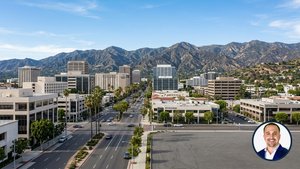




West San Fernando Valley Seller Guide
Selling a Home in Canoga Park in 2026
West Valley affordability edge, Topanga corridor appeal, three pricing zones, fire insurance strategy, and ADU value angles - from a 13-year LA agent who knows this market.
What This Guide Covers
- 1 Quick Answer: Is 2026 a Good Time to Sell in Canoga Park?
- 2 Three Pricing Zones Every Canoga Park Seller Must Know
- 3 Who Is Buying in Canoga Park in 2026?
- 4 The Topanga Corridor Premium and What It Means for Your Price
- 5 Canoga Park vs West Hills: The Address Premium Explained
- 6 ADU Potential and the Investor Buyer Angle
- 7 Fire Disclosure, Insurance Costs, and What Buyers Will Ask
- 8 LAUSD Schools: Honest Disclosure That Builds Trust
- 9 Five Mistakes Canoga Park Sellers Make
- 10 What Will You Net? Proceeds at Three Price Points
- 11 The Six-Step Selling Process
- 12 Housing Stock and Common Inspection Issues
- 13 The Investment Narrative: What Investors Are Seeing
- 14 Proposition 19 for Long-Tenured Sellers
- 15 Timing Your Sale: Seasonal Calendar
- 16 Pre-Sale Readiness Checklist (15 Items)
- 17 Frequently Asked Questions
Canoga Park SFR prices in 2026 range from $550,000 in the southern industrial-adjacent corridors to $850,000 in the north above Sherman Way. Typical core homes sell for $620,000-$750,000 in 14-28 days. That is 10-15% below West Hills and Woodland Hills for comparable lot sizes - which is exactly why buyer demand from those adjacent markets spills over into Canoga Park every spring and fall.
Is 2026 a Good Time to Sell in Canoga Park?
For most Canoga Park sellers, 2026 is a solid year to transact - particularly if your home is north of Sherman Way, has ADU potential, or sits within walking distance of the Topanga Canyon Blvd corridor. The West Valley affordability dynamic is structural: buyers who want Woodland Hills or Tarzana are regularly priced out of those markets and reset their search south into Canoga Park. That spillover demand is the engine behind Canoga Park's recent price stability.
The picture is more nuanced in the southern zone near the industrial areas off Roscoe and DeSoto. Homes there face a harder buyer pool: more investor-heavy, more price-sensitive, and slower to move without meaningful prep work. Understanding which zone your home sits in is the starting point for every pricing conversation I have with Canoga Park sellers.
In my 13 years working LA County, I've watched Canoga Park shift from a neighborhood that serious buyers overlooked to one that draws multiple offers on well-staged properties. The Reseda Blvd and Owensmouth Ave retail corridors are improving. The Topanga mall and the creek trail network draw outdoor-lifestyle buyers from Sherman Oaks and Encino who want more land for less money. That repositioning is real - and sellers who price and prep correctly are capturing it.
🏠 FREE Weekly Workshop — First-Time Buyer Blueprint
Learn exactly how to buy a home in LA — prices, process, and pitfalls. Live every week, totally free.
Reserve Your Free Seat →Three Pricing Zones Every Canoga Park Seller Must Know
Canoga Park is not a single market. ZIP code 91303 spans roughly 4.5 square miles of significant diversity - from residential streets north of Sherman Way that genuinely compete with West Hills, to flatland blocks near the industrial corridors where investor buyers dominate. Using the wrong comp set is the most common pricing mistake I see in this neighborhood.
Here is how I break down the three zones, with current price ranges based on Q1-Q2 2026 sales data from comparable closed transactions in each area.
Canoga Park comps from across zone lines will mislead you. A sale north of Sherman Way at $820,000 does not justify a $820,000 price for a home three blocks south of Roscoe. I see sellers - and their agents - make this mistake every year. Get zone-specific comps before you price.
Price Per Square Foot Comparison: West Valley Context
Who Is Buying in Canoga Park in 2026?
Knowing your buyer before you list changes everything: how you stage, what you emphasize in the description, which improvements get ROI, and how you negotiate. Canoga Park in 2026 draws four distinct buyer types, and each one makes decisions differently. Here is who is active in this market right now.
The Topanga Corridor Premium and What It Means for Your Price
The Topanga Canyon Blvd corridor is Canoga Park's most underappreciated pricing driver. Homes within a short walk or bike ride of Topanga Creek Trailhead, the Topanga State Park access points, or the retail cluster around Topanga Canyon Blvd and Sherman Way attract a distinct buyer pool: outdoor-lifestyle buyers who moved west from Sherman Oaks or Encino and want trail access without Malibu prices.
In my experience pricing homes in this corridor, the proximity premium is real and measurable. Homes on or near Topanga Canyon Blvd north of Sherman Way - particularly those on the west side with views toward the Santa Monica Mountains - regularly achieve 4-7% above the core zone median when they are marketed correctly. The key word is "correctly." If your listing doesn't mention Topanga access, the outdoor buyer doesn't find you.
When listing a home near Topanga Canyon Blvd, the first three sentences of your description should name the trail access specifically. "Walking distance to Topanga Creek Trailhead" and "minutes from Topanga State Park entrance" are phrases that appear in outdoor buyer search queries. This is targeted marketing, not puffery.
The Topanga State Park is the second-largest state park in the US that is surrounded by an urban area. That is an asset that Canoga Park sellers north of Sherman Way have that Woodland Hills buyers expect to pay for. Sellers who don't surface this angle in their marketing leave money on the table. I have seen the same block, same floor plan, same condition - one home marketed with trail access language, one without - and the trail home routinely outperforms.
| Location Factor | Price Impact | Buyer Type Attracted | Note |
|---|---|---|---|
| Within 0.5 mi of Topanga Creek Trailhead | +4-7% over core | Outdoor lifestyle, remote worker | Must be marketed explicitly |
| North of Sherman Way (any street) | +8-12% over south zone | West Valley move-down buyer | Quieter streets, larger lots |
| Owensmouth Ave / Topanga Canyon Blvd retail | +2-4% walkability | First-gen, lifestyle buyer | Improving retail = rising confidence |
| West Hills mailing address (91307) | +5-10% over CP-address | Status-conscious buyer | Zip split artifact - verify with title |
| South of Roscoe, industrial adj. | Lowest in 91303 | Investor-dominated | Prep ROI highest here |
Canoga Park vs West Hills: The Address Premium Explained
One of the most confusing aspects of selling in this area is the ZIP code split between Canoga Park (91303) and West Hills (91307/91304). The neighborhoods share geography, lot sizes, and much of the same housing stock - but homes with a West Hills mailing address can command 5-10% more than Canoga Park-addressed homes on the same block.
The distinction matters for sellers in two specific ways. First, if your home technically carries a West Hills address due to the ZIP line that runs through this area, you should market to West Hills comps - not Canoga Park comps. Second, if your home has a Canoga Park address but sits near the West Hills boundary, your marketing should not try to claim a West Hills identity it doesn't have. Buyers will verify during escrow and a mismatch destroys trust.
- +Lower entry price attracts larger buyer pool
- +West Hills spillover demand is structural
- +ADU lots are common and in demand
- +Topanga corridor premium available for north-zone homes
- +Investor interest keeps baseline demand steady
- +Faster absorption vs West Hills at overlapping price bands
- -Name recognition gap vs West Hills and Woodland Hills
- -Mixed school ratings require careful disclosure
- -Southern zone has industrial adjacency perception
- -Fire zone proximity in north/west areas raises insurance questions
- -Investor offers often below conventional buyers - know your floor
- -Reseda Blvd retail perception still improving, not yet arrived
| Metric | Canoga Park (91303) | West Hills (91307) | Woodland Hills (91367) |
|---|---|---|---|
| Median SFR Price (2026 est.) | $680K-$720K | $780K-$860K | $850K-$950K |
| Price Per Sqft (est.) | $400-$490 | $510-$570 | $530-$600 |
| Typical DOM | 14-30 days | 18-35 days | 20-38 days |
| Lot Size Similarity | Similar to WH | Comparable | Similar |
| Fire Zone Exposure | North/west parcels | Higher exposure | Moderate exposure |
| ADU Opportunity | High | Moderate | Moderate |
ADU Potential and the Investor Buyer Angle
Canoga Park is one of the West Valley neighborhoods where ADU potential is a real and meaningful selling point - not just a checkbox. Many of the 1950s and 1960s SFR homes in this area sit on lots with detached garages, long driveways, or rear yard space that qualifies for a junior ADU or full accessory dwelling unit under California's current permitting framework.
For sellers, documenting your ADU potential before listing can expand your buyer pool meaningfully. Investor buyers - who account for a significant share of Canoga Park transactions, particularly in the core and south zones - actively search for ADU-eligible properties. A home that a family buyer values at $680,000 might be valued by an investor at $700,000-$720,000 if the ADU potential is documented and the lot measurements are confirmed. That gap is real money.
Before listing, get a licensed contractor or ADU specialist to confirm your lot's eligibility and provide a rough cost-to-build estimate. This single document can generate competing offers from investors who see the upside immediately. The cost for this consultation is typically $200-$500. The return can be $20,000-$40,000 in added buyer competition.
ADU Scenarios That Attract Investor Buyers in Canoga Park
The multigenerational family buyer is also drawn to ADU potential, for different reasons. First-generation Canoga Park buyers often want to house a parent or in-law on the same property. If your lot supports that option, it should be explicitly named in your listing description and shown in your marketing photography. An empty yard that "could" have an ADU is worth less than a documented, permitted ADU potential with a contractor sign-off.
Browse Canoga Park Investment PropertiesFire Disclosure, Insurance Costs, and What Buyers Will Ask
Canoga Park's proximity to the Chatsworth hills, the Santa Susana Pass corridor, and the Simi Valley interface zone means that fire insurance is a real conversation in some parts of this neighborhood. The Woolsey Fire (2018) and the subsequent fires in adjacent Chatsworth and West Hills remain in the collective memory of buyers and their agents. In 2026, insurance availability and cost is a qualifying question for many buyers before they make offers in any West Valley neighborhood that touches elevated terrain.
The practical impact varies significantly by parcel. Homes south of Sherman Way and east of Topanga Canyon Blvd in the flat core are generally outside designated Very High Fire Hazard Severity Zones. Homes in the northern and western portions of Canoga Park - particularly those near the Santa Susana Mountains, the rocky terrain near the old railroad corridor, or the Chatsworth border - should be verified individually using the CAL FIRE VHFHSZ map before listing.
California law requires sellers to disclose whether a property is located in a Very High Fire Hazard Severity Zone. This is a mandatory element of the California Natural Hazard Disclosure statement. Failure to disclose is a legal liability. Do not assume - pull your parcel's designation from the CAL FIRE map or ask your agent to do it before you list.
Fire Insurance Pre-Listing Checklist for Canoga Park Sellers
If your Canoga Park home is in the flat core zone and is clearly outside the VHFHSZ designation, say so. In a market where buyers are fire-insurance-anxious after two years of carrier exits from California, "not in a fire hazard zone" is a genuine differentiator against West Hills and Woodland Hills inventory where fire zone exposure is more common.
LAUSD Schools: Honest Disclosure That Builds Trust
Canoga Park is served by the Los Angeles Unified School District, and the school ratings across this neighborhood are mixed. Elementary schools in the area include Calvert Street, Chase Street, and Welby Way, with ratings that range from 3/10 to 7/10 on GreatSchools. Canoga Park High School holds a 4/10 GreatSchools rating. Some families in this neighborhood choose LAUSD magnet programs, charter schools, or private schools as a result.
As a seller, the instinct to avoid school conversations is understandable - but it is the wrong move. Buyers who care about schools will research them regardless of what your listing says. If your listing oversells or ignores schools, buyers feel misled. Honest framing - "served by LAUSD with diverse school options including magnet programs; some families in the area choose charter or private schools" - is factually correct and builds the trust that moves transactions forward. I have seen disclosure-forward school language generate more offers, not fewer, because it signals a seller who is not hiding anything.
Never inflate school ratings in a listing description. Never cite a GreatSchools rating that you have not verified in the last 30 days. California license law considers material misrepresentations about school quality as a disclosure violation. Honest, factual school language is both the ethical and the legally correct approach.
| School | Type | Grades | Rating Note | Buyer Impact |
|---|---|---|---|---|
| Welby Way Elementary | LAUSD | K-5 | Above district avg | Positive for core-zone homes |
| Calvert Street Elementary | LAUSD | K-5 | Mixed, improving | Neutral - verify current |
| Canoga Park High School | LAUSD | 9-12 | 4/10 GreatSchools | Disclose honestly; buyers will find |
| LAUSD Magnet Programs | LAUSD Magnet | Various | Highly competitive | Strong appeal to some buyers |
| Local Charter Options | Charter | K-8 typically | Varies by campus | Important context for families |
Proposition 19 and What Long-Tenured Canoga Park Sellers Need to Know
If you have owned your Canoga Park home for 10 or more years, Proposition 19 - the California property tax portability law passed in November 2020 - is one of the most financially significant decisions you will make in your sale process. Proposition 19 allows eligible homeowners (55 or older, severely disabled, or victims of a declared disaster) to transfer their existing assessed property tax base to a replacement home anywhere in California, up to three times in a lifetime.
For a long-tenured Canoga Park seller, the numbers can be meaningful. If you purchased your home in 2005 for $400,000, your current assessed value is likely in the $520,000-$600,000 range after Proposition 13 annual increases. But your current market value might be $720,000-$780,000. If you buy a new home at $750,000, your property taxes on the new home would normally be calculated on the $750,000 purchase price. Under Proposition 19, if you qualify, you can transfer your lower assessed value - potentially saving thousands of dollars per year in property taxes.
You purchased in 2005 for $420,000. Current assessed value after Prop 13 caps: approximately $530,000. Market value today: $730,000. You are 58 years old and selling to buy a new home for $680,000. Under Proposition 19, your new assessed value on the $680,000 home would be adjusted - potentially saving you $3,000-$5,000 per year in property taxes compared to being assessed at the full $680,000 purchase price. Consult your CPA and your agent before closing - the Prop 19 transfer claim must be filed within specific timelines.
Proposition 19 also changed the rules around inheriting property from parents. If you are considering selling because a parent's trust directs you to do so, the prior rules around parent-child property tax exclusions changed significantly on February 16, 2021. The new rules are more restrictive. If you are involved in a trust sale of a Canoga Park property inherited from a parent, talk to a real estate attorney and your CPA about the timing implications before you proceed.
| Prop 19 Situation | Who Qualifies | Benefit | Timeline |
|---|---|---|---|
| Base year transfer to new home | Age 55+ or severely disabled | Lower property taxes on replacement home | Must file within 1 year of sale or purchase |
| Disaster victim transfer | Declared disaster victim | Same base year transfer benefit | Must file within 3 years |
| Parent-child inheritance (post-Feb 2021) | Child must occupy as primary residence | Partial exclusion only - more restricted | Must file within 12 months of transfer |
| Grandparent-grandchild inheritance | Both parents must be deceased | Same as parent-child - more restricted | 12 months from transfer |
I am not a CPA or attorney, and nothing in this article should be taken as tax or legal advice. But I work with Canoga Park sellers who have owned their homes for 15-30 years, and Proposition 19 is consistently one of the most important financial tools they have access to. If you are a long-tenured seller in this neighborhood and you have not spoken with your CPA about your Prop 19 eligibility before listing, do that before you go to market. The timing of when you sell, and what you buy next, can have meaningful tax implications for years after the transaction closes.
Five Mistakes Canoga Park Sellers Make in 2026
After 13 years representing sellers across Los Angeles County, these are the mistakes I see most often from Canoga Park sellers - and the ones that cost the most money or time.
Timing Your Canoga Park Sale: What the Calendar Actually Looks Like
Canoga Park follows the broader West Valley seasonal market pattern, but with some nuances worth knowing. The peak listing window runs from late February through Memorial Day. During this window, the largest pool of qualified buyers is actively shopping, and the competition for well-priced homes is at its highest. If you can control your timeline, launching in late February or early March gives you the best chance of a fast, clean transaction at or above your list price.
The second-best window is September through mid-October. Families who did not find what they wanted in the spring come back into the market after settling kids into school, and they tend to be more decisive. Fall buyers in Canoga Park are often motivated - they are not casual browsers, they are people who have been looking for several months and are ready to transact. A well-priced north-zone or Topanga-corridor home launched in September can see strong competition.
The periods to avoid, if you have flexibility, are late November through January and mid-June through August. The holiday moratorium slows everything, and the summer months see reduced buyer traffic as families stabilize around school schedules. Canoga Park homes that launch in these windows tend to sit longer, accumulate days-on-market, and ultimately sell for less than spring or fall equivalents.
| Launch Window | Buyer Pool Activity | Expected DOM | Price Outcome | Recommendation |
|---|---|---|---|---|
| Late Feb - May (peak spring) | Highest of the year | 10-21 days | At or above list price | Best window for most sellers |
| September - October (fall) | Second highest | 14-28 days | Near list price | Strong second choice |
| June - August (summer) | Reduced, more casual | 25-45 days | Slight discount typical | Avoid if timing flexible |
| November - January (holiday) | Lowest of the year | 35-60+ days | Often below list price | Avoid unless financially required |
Day-of-Week Launch Matters Too
Within any seasonal window, Thursday is the best day to go live on the MLS. Buyers searching over the weekend will see your home with fresh-listing status, and the Friday-through-Sunday showing window is when the most foot traffic happens. Monday through Wednesday launches miss the weekend traffic cycle and add unnecessary days to your apparent DOM before your first showing weekend.
If your home is particularly strong - north zone, documented ADU potential, or Topanga corridor location - consider holding offers for 7-10 days after your first weekend of showings. This strategy, which I use with select Canoga Park listings, lets the full buyer pool materialize before you commit to any single offer. The risk of holding offers is that a buyer who wants certainty may walk away. The reward is competing offers, which is when sellers get their best price and terms.
If you are deciding between listing this spring or waiting until fall, factor in your carrying costs for the extra months: mortgage, property taxes, insurance, and maintenance. For a $720,000 home with a $400,000 mortgage at 6.5%, you are carrying roughly $3,500-$4,000 per month while you wait. A spring sale that closes in April versus a fall sale that closes in October represents six months of carrying costs - roughly $21,000-$24,000 in lost value. Timing matters, but don't delay past the point where waiting costs more than it gains.
What Will You Net? Proceeds at Three Price Points
Every Canoga Park seller I work with wants to know the same thing before we start: what do I actually walk away with? The gross sale price is not the number that matters - what matters is your net proceeds after closing costs, commissions, and any outstanding loan balance. Here is a general framework for three typical Canoga Park price points. Your specific numbers will depend on your loan payoff, any concessions, and how we negotiate commission structure.
Estimates only. Does not include your outstanding loan payoff, prepayment penalties, HOA transfer fees, or capital gains tax considerations. Consult your agent and CPA for a personalized net sheet before committing to a list price.
The Six-Step Selling Process for Canoga Park Homeowners
Selling a home in Canoga Park in 2026 is not complicated if you work the process in the right order. The most expensive mistakes happen when sellers skip steps - particularly the pricing and disclosure steps that come before the listing goes live. Here is the sequence I walk every Canoga Park seller through.
Canoga Park Housing Stock and Common Inspection Issues Sellers Should Prepare For
The majority of Canoga Park's SFR inventory was built between 1945 and 1975. These are solid homes - ranch-style construction on concrete slab or raised foundations, with good lot sizes and street presence. But the age of the housing stock means predictable inspection findings that Canoga Park sellers encounter repeatedly. Knowing what buyers are likely to find before you list allows you to address issues strategically rather than reactively during escrow.
The most expensive reactive renegotiations I've seen in Canoga Park all started the same way: a seller was surprised by an inspection finding that was entirely predictable given the home's age and construction. A $3,000 electrical panel repair that the seller knew about but didn't disclose becomes a $6,000 credit demand from a buyer who feels misled. The same repair, disclosed upfront and priced into the list price, is a non-event.
| Issue | Common in Canoga Park Because | Typical Cost Range | Seller Strategy |
|---|---|---|---|
| 60-amp or 100-amp electrical panels | Pre-1970 construction; many not upgraded | $3,500-$6,500 to upgrade to 200-amp | Disclose upfront or replace pre-listing for cleaner offers |
| Galvanized water supply piping | Standard material through 1960s; corrodes over time | $8,000-$18,000 full repipe | Get a plumber's scope report before listing; disclose findings |
| Original single-pane windows | Pre-1980 construction; common in core and south zones | $8,000-$20,000 for full replacement | Often left for buyer; disclose and price accordingly |
| Unpermitted room additions or garage conversions | Owners added space over decades without permits | Varies widely - legalization or disclose as-is | Pull permit history from LADBS before listing; strategic disclosure |
| Sewer lateral deterioration | Original clay or cast iron; root intrusion common | $4,000-$12,000 for lateral replacement | Get a pre-listing sewer scope; fix or disclose |
| HVAC systems at end of life | Units from 1990s-2000s are reaching 25-30 years | $6,000-$14,000 for full system replacement | Service records help; consider age disclosure in seller disclosure |
| Roof age (15+ years) | Composition shingles have 20-25 year life; many approaching end | $12,000-$22,000 for full replacement | Get a roof certification before listing or price in the discount |
For Canoga Park sellers in the core and south zones, where buyers are more price-sensitive and investor buyers are a larger share of the pool, pre-listing inspection findings require a clear strategy: repair what generates ROI, disclose what you can't or won't fix, and price the home to reflect its condition honestly. A core-zone home with a new roof and updated electrical will outperform a comparable home with a 20-year-old roof and original panels every time.
For north-zone sellers near Sherman Way and the Topanga corridor, where the buyer pool includes more conventional buyers willing to pay a premium, the calculus shifts slightly. These buyers often have more financing to work with and are more willing to do post-purchase improvements - but they still expect the foundational systems (electrical, plumbing, roof, sewer) to be in adequate condition or priced accordingly. "Good bones" is not a substitute for a real inspection strategy.
I recommend every Canoga Park seller invest in a pre-listing home inspection ($400-$600) before going to market. This is not mandatory - but it gives you the information you need to price accurately, disclose proactively, and avoid surprise renegotiation demands during escrow. Sellers who enter the market with a clean inspection report or a disclosed-and-priced condition package consistently have smoother transactions than those who skip this step.
Canoga Park's Investment Narrative: What Sherman Oaks and Encino Buyers Are Seeing
Canoga Park has been on the radar of West Valley investors and fix-and-flip buyers for several years now. The pattern is familiar across LA County - an affordable pocket adjacent to an established premium neighborhood, with improving retail, trail access, and a buyer pool that is slowly catching up to the neighborhood's actual quality of life. Sherman Oaks investors who bought Sylmar in 2015 and Echo Park in 2017 are now looking at Canoga Park with the same calculus.
For sellers, this is both an opportunity and a caution. The investment buyer is a real segment of your market - they show up fast, they make cash offers, and they make decisions quickly. But they are also disciplined buyers who know their numbers and will not overpay. Understanding the difference between an investor offer that reflects your real market value and one that is simply testing your desperation is the most important negotiation skill a Canoga Park seller can have in 2026.
Canoga Park's repositioning is real but not yet complete. Sellers who price as though the transformation is finished - rather than in progress - will overshoot the market and sit. The right strategy is to price to where the market is today, not where you hope it will be in two years. A well-priced home that closes in 21 days is worth more than an overpriced home that eventually closes 90 days later after two price reductions.
Investment Activity Patterns in Canoga Park (2024-2026)
| Buyer Origin | Target Zone | What They Buy | Typical Offer Behavior |
|---|---|---|---|
| Sherman Oaks / Encino investors | North zone, Topanga corridor | SFR with large lots, ADU potential | Cash or hard money, fast close, below market 5-8% |
| Local fix-and-flip operators | Core zone, south zone | Deferred maintenance SFR | Cash, aggressive price, AS-IS requirement |
| Out-of-area multifamily investors | Any zone with R2/R3 zoning | Duplexes, ADU-eligible SFR | At or above market when numbers work |
| Owner-occupant buyers from adjacent markets | North zone, Topanga proximity | Move-in ready SFR, good lots | Conventional financing, near ask or above |
The Reseda Blvd and Owensmouth Ave retail corridor improvement is the most visible signal of this shift. New restaurant openings, improved streetscaping, and the growing Topanga outdoor-lifestyle brand are all factors that attract the non-investor buyer pool. When the lifestyle buyer competes with the investor buyer on the same property, sellers win - prices rise and terms improve. This is the dynamic that well-marketed, well-priced Canoga Park homes are beginning to capture.
Canoga Park Pre-Sale Readiness Checklist
Before your home goes live on the MLS, there are 15 things I walk every Canoga Park seller through. Some of these are legal requirements. Some are strategic. All of them affect how buyers perceive your home and how much you net at closing. This list is not exhaustive - your specific property may have additional considerations - but it covers the most common pre-listing gaps I see in this neighborhood.
Frequently Asked Questions: Selling a Home in Canoga Park
Related Guides for West Valley and LA Sellers
These articles from the same cluster provide additional context for sellers navigating the Los Angeles market in 2026.
💰 What's My Home Worth in 2026?
Get a free, accurate valuation from Justin Borges — backed by real comps, not a Zestimate.
Get My Free Home Valuation →Ready to Sell Your Canoga Park Home?
Text or call anytime. No pressure, no obligation. I'll tell you exactly where your home stands in today's market.